

Eating healthy does not have to be complicated. You do not need expensive superfoods, strict dieting rules, or special supplements to improve your everyday eating habits. A balanced diet built around ordinary, nutritious foods can provide most of the nutrients your body needs.
However, many people are confused about what a healthy daily diet should actually look like. Should you eat more protein? Are carbohydrates unhealthy? How much fruit and vegetables should you consume? Is skipping breakfast a good idea?
Understanding the basics of balanced nutrition can help you make better food choices and support your long-term health.
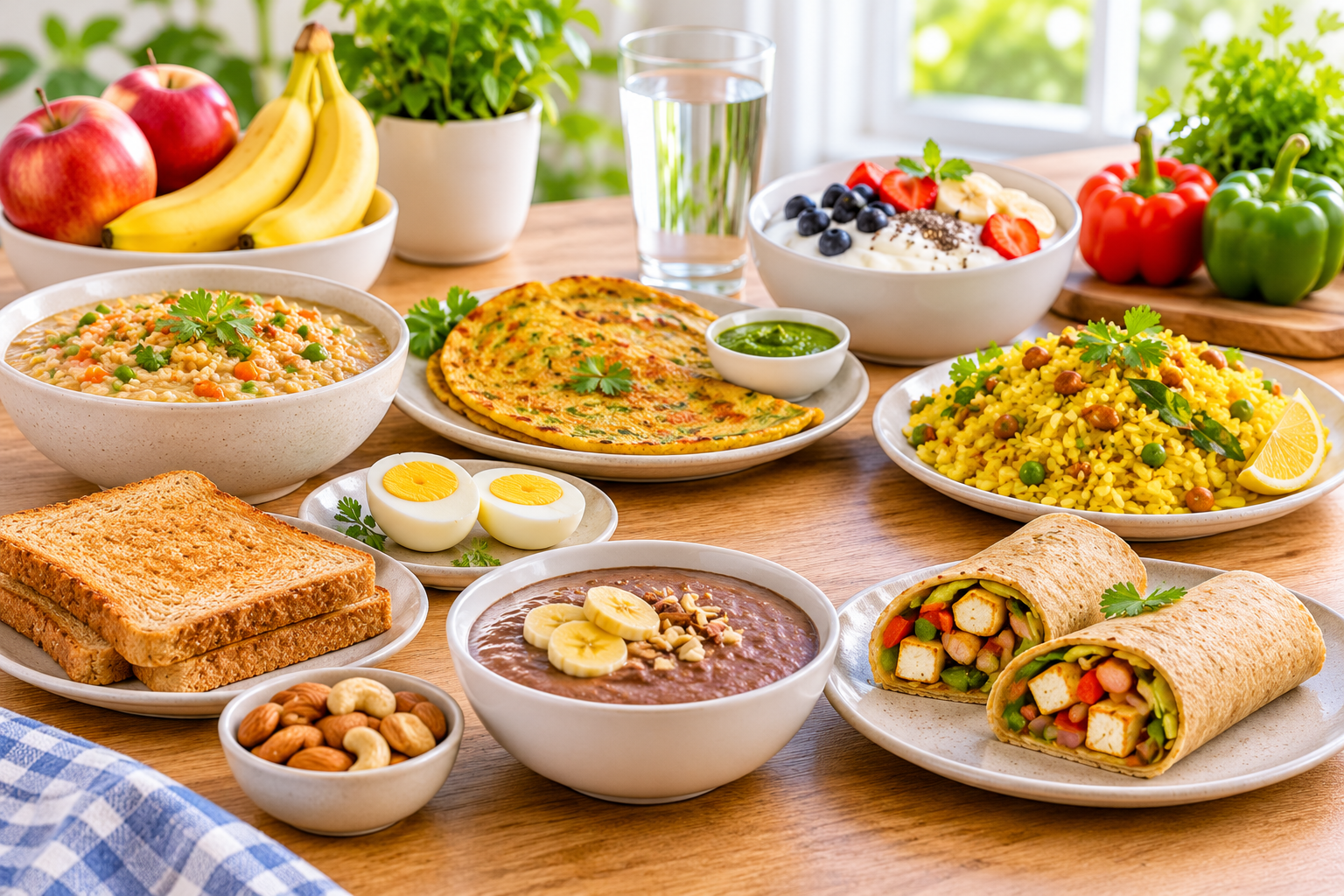 Also Read10 Healthy Breakfast Recipes to Start Your Day RightBreakfast is often called the most important meal of the day. After several hours of overnight fasting, a nutritious breakfast can help provide energy and…
In this guide, we will explore the essential components of a balanced diet, the foods you should include, and simple ways to create healthier meals every day.
1. What Is a Balanced Diet?
A balanced diet is an eating pattern that provides the body with the energy and essential nutrients it needs to function properly.
These nutrients include:
- Carbohydrates
- Proteins
- Healthy fats
- Vitamins
- Minerals
- Dietary fibre
- Water
No single food contains everything your body needs. Therefore, eating a variety of foods from different food groups is important.
A balanced diet should also consider your age, activity level, health condition, food preferences, and individual nutritional requirements.
2. Include Fruits and Vegetables in Your Daily Meals
Fruits and vegetables are important parts of a healthy eating pattern.
They provide vitamins, minerals, dietary fibre, and beneficial plant compounds.
Regularly eating a variety of fruits and vegetables can support digestive health and contribute to overall well-being.
Healthy Fruits to Include
- Apples
- Bananas
- Oranges
- Guava
- Papaya
- Seasonal berries
- Watermelon
Nutritious Vegetables
- Spinach
- Carrots
- Broccoli
- Tomatoes
- Cauliflower
- Green beans
- Bottle gourd
Try to include different colours of fruits and vegetables in your meals.
Fresh, frozen, and appropriately prepared seasonal produce can all contribute to a nutritious diet.
3. Choose the Right Sources of Carbohydrates
Carbohydrates are an important source of energy for the body.
However, not all carbohydrate-rich foods provide the same nutritional value.
Whole grains and minimally processed carbohydrate sources generally provide more fibre and nutrients than highly refined products.
Better Carbohydrate Choices
- Whole wheat roti
- Oats
- Brown rice
- Millets
- Whole grain bread
- Sweet potatoes
- Quinoa
You do not need to eliminate rice, roti, or other traditional carbohydrate foods to eat healthily.
Instead, pay attention to portion sizes and combine them with vegetables and protein-rich foods.
4. Add Protein to Your Daily Diet
Protein helps build and repair body tissues and supports muscle maintenance, immune function, and many other essential processes.
Both vegetarian and non-vegetarian foods can provide protein.
Vegetarian Protein Sources
- Lentils
- Chickpeas
- Kidney beans
- Paneer
- Tofu
- Milk
- Yogurt
- Soybeans
- Nuts and seeds
Non-Vegetarian Protein Sources
- Eggs
- Fish
- Chicken
- Lean meat
Including a protein-rich food in your main meals is a practical way to improve the nutritional balance of your diet.
5. Do Not Avoid Healthy Fats
Fat is an essential nutrient. It provides energy, supports cell function, and helps the body absorb fat-soluble vitamins such as vitamins A, D, E, and K.
The type of fat you consume matters.
Healthier Fat Sources
- Almonds
- Walnuts
- Peanuts
- Flaxseeds
- Chia seeds
- Sunflower seeds
- Olive oil
- Mustard oil
Try to limit foods containing excessive amounts of trans fats and avoid consuming large quantities of deep-fried foods.
Remember that even healthy fats are energy-dense, so reasonable portions are important.
6. Why Dietary Fibre Is Important
Dietary fibre supports healthy digestion and helps maintain regular bowel movements.
Some types of fibre also support healthy blood cholesterol and blood glucose levels.
Good sources include:
- Whole grains
- Fruits
- Vegetables
- Lentils
- Beans
- Nuts
- Seeds
Increasing fibre intake gradually and drinking enough water can help support digestive comfort.
7. Drink Enough Water Throughout the Day
Water is essential for digestion, circulation, temperature regulation, and many other body functions.
Your hydration needs depend on factors such as climate, physical activity, age, diet, and health conditions.
In hot weather or during exercise, your fluid requirements may increase.
Simple Hydration Habits
- Keep drinking water accessible.
- Drink regularly throughout the day.
- Include water-rich fruits and vegetables.
- Drink additional fluids when sweating heavily.
- Pay attention to thirst and urine colour.
Plain water is generally a good everyday hydration choice.
People with certain medical conditions may need specific fluid recommendations from their healthcare professionals.
8. What Should a Healthy Daily Meal Plan Look Like?
A balanced diet does not require complicated recipes.
Here is an example of a simple Indian-style daily meal pattern.
Breakfast
Choose one option:
- Vegetable oats with milk.
- Vegetable poha with peanuts and yogurt.
- Whole wheat toast with eggs.
- Moong dal chilla with curd.
Mid-Morning Snack
- One seasonal fruit.
- A small portion of nuts.
- Plain yogurt.
Lunch
A balanced lunch may include:
- Whole wheat roti or rice.
- Dal or another protein-rich dish.
- One or two vegetable preparations.
- Fresh salad.
- Plain curd.
Evening Snack
Choose healthier alternatives such as:
- Roasted chana.
- Sprouts salad.
- Fruit.
- Unsweetened yogurt.
- A small portion of nuts.
Dinner
Keep dinner nutritious and comfortable for your appetite.
Possible choices include:
- Roti with vegetables and dal.
- Vegetable khichdi with curd.
- Grilled paneer with vegetables.
- Fish or chicken with rice and vegetables.
The exact portions should depend on your individual energy requirements.
9. Foods You Should Limit for Better Health
A balanced diet is not about completely avoiding your favourite foods.
However, regularly consuming large amounts of certain foods can negatively affect overall diet quality.
Try to limit:
- Sugary drinks.
- Excessively salty packaged snacks.
- Foods high in added sugar.
- Deep-fried foods.
- Highly processed meats.
- Foods containing industrial trans fats.
You can still enjoy occasional treats while maintaining an overall nutritious eating pattern.
10. Common Balanced Diet Mistakes to Avoid
Skipping Entire Food Groups
Eliminating carbohydrates, fats, or other major food groups without a medical reason can make it harder to meet your nutritional requirements.
Eating Too Little Protein
A diet consisting mainly of refined carbohydrates may not provide sufficient protein.
Include suitable protein sources in your regular meals.
Depending on Supplements
Supplements cannot replace the variety of nutrients and beneficial compounds found in whole foods.
 Also Read10 Simple Ways to Improve Sleep Quality NaturallyA good night's sleep is essential for maintaining physical health, mental well-being, and daily productivity. Yet, many people struggle to fall asleep, wake up frequently…
Use them when there is a genuine nutritional need and professional guidance.
Ignoring Portion Sizes
Even nutritious foods contribute energy. Eating portions that are much larger than your needs can affect overall energy balance.
Following Extreme Diet Trends
Very restrictive diets may be difficult to maintain and can create nutritional gaps.
Choose sustainable